What does using AI for post-mortems actually mean?
April 23, 2026 — 5 min read
Everyone is using AI to help with post-mortems now. The pitch is obvious: post-mortems are time-consuming, the blank page is brutal, and AI is very good at producing structured, confident-sounding documents quickly.
We're not here to push back on that. We've built AI into our own post-mortem experience, pulling your Slack thread, timeline, PRs, and custom fields together — this is especially powerful for teams built around slack-native incident response and modern incident management software — and giving your team a meaningful starting point in seconds. We think that's genuinely valuable, and the teams using it agree.
But "AI for post-mortems" can mean very different things. Post-mortems are just one stage of the broader incident response lifecycle, and AI's role varies across all of it. There's a version that makes post-mortems faster and better. And there's a version that makes them faster and quietly useless. The difference isn't obvious from the outside — which is exactly why it's worth being precise about.
The trap
AI-assisted post-mortems tend to look great. Structured, confident, plausible. Then someone reads it closely and realises: nobody actually said that. Nobody owns that conclusion. The "lessons learned" at the bottom read like something a consultant wrote, not something the team believes.
That's the trap, and it's subtle. The most dangerous AI-assisted post-mortem isn't the one that's obviously wrong. It's the one that sounds exactly right, but was produced without anyone doing the real thinking — a pattern explored in The post-mortem problem.
A post-mortem's value isn't in the document. It's in the team that genuinely worked out what happened, and why. If AI short-circuits that process, it short-circuits the learning. You end up with beautifully formatted docs that sit in a folder and change nothing. Faster to produce, yes. But also useless in the ways that matter.
Compression vs. synthesis
Here's the distinction we keep coming back to.
Compression is taking something sprawling — a messy incident channel, a fragmented timeline, a dozen overlapping threads — and making it navigable. It's what your team needs to get started, and it's what AI does well:
- Assembling a timeline from alerts, Slack messages, and PRs so nobody has to piece it together manually
- Generating a structured first draft from your incident context so the document exists before anyone has to stare at a blank page
- Reviewing a draft for completeness, flagging gaps, missing owners, unanswered questions
- Surfacing relevant context from past incidents so patterns don't get missed
This is the mechanical, time-consuming prep work that often just doesn't happen because the incident is over, everyone's exhausted, and there are three other things on fire. It should be automated. It can be.
Synthesis is different. It's understanding why contributing factors aligned the way they did, not just what happened, but what it reveals about your system. It's deciding which follow-up actions actually matter versus which ones are wishful thinking that'll drift out of the backlog. It's naming the organisational or cultural issues that a technical fix won't touch — the kind of psychological safety in incident management that makes people speak honestly in the first place. It's the conclusion someone has to own, and be able to defend.
Synthesis that nobody owns is just prose. It doesn't matter how well-written it is. The value is in the team that produced it, believes it, and does something about it.
What this means in practice
AI can meaningfully reduce the time it takes to produce a post-mortem. The raw material — timeline, context, structure — can be ready in minutes rather than hours. That's real.
But "faster to produce" and "faster to learn from" are not the same thing. The synthesis — the actual work of understanding what happened and deciding what changes — still takes the time it takes. It should. That's where the value is.
The mental model we use: AI handles the effort so humans can focus on the insight. Not AI instead of thinking. AI so the thinking can actually happen.
Explore the new post-mortems experience → incident.io/post-mortems
See related articles
Introducing Investigations, powered by Nexus.
Today we're launching Investigations: agentic root cause analysis that starts the moment you're paged, figures out what broke and why, and works with your team through to resolution. Here's what we built, what's powering it, and why it took some time to get right.

August 5, 2026
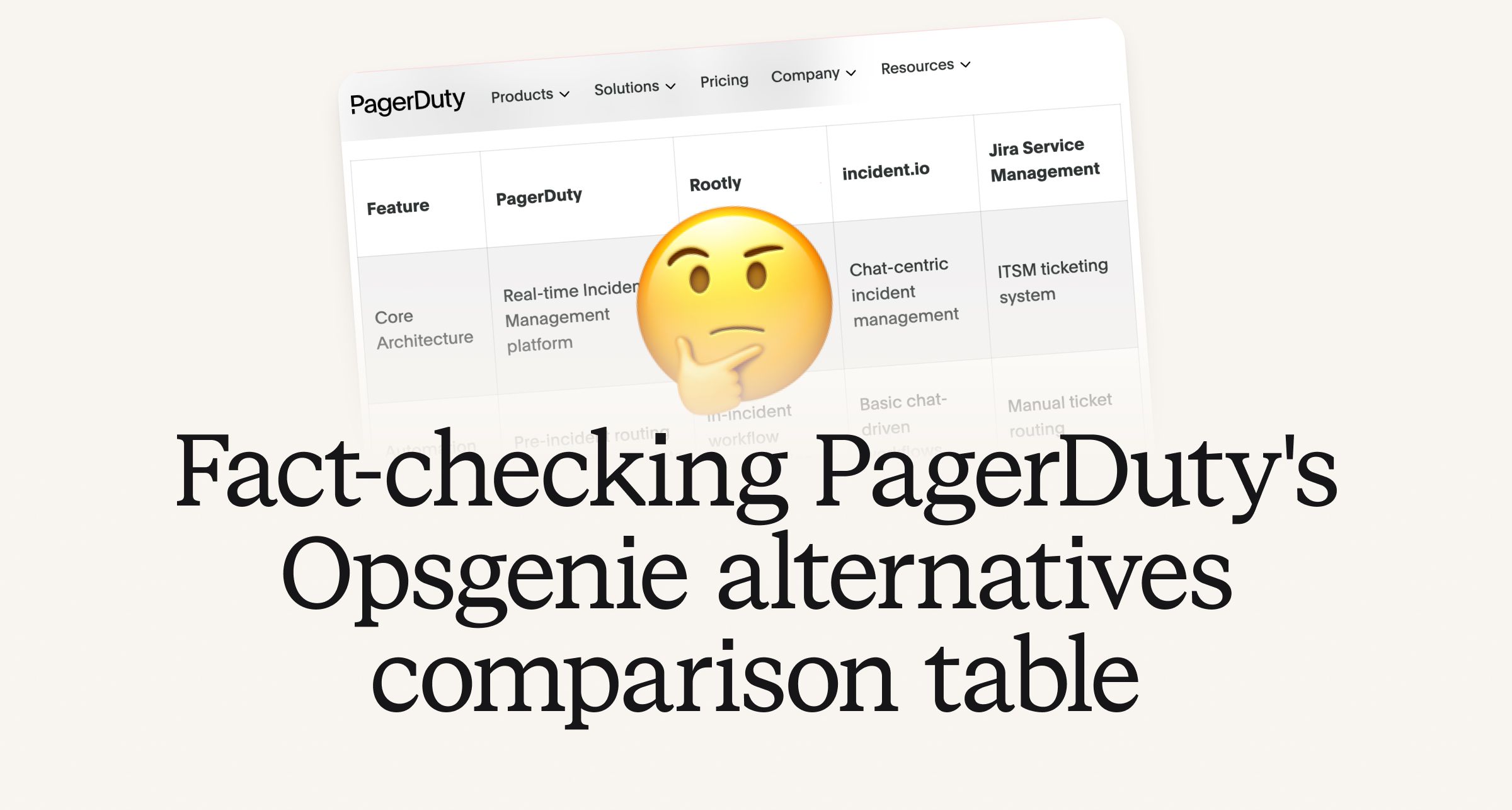
Fact-checking PagerDuty's Opsgenie alternatives comparison table
PagerDuty published a new comparison table about incident.io. Once again, it describes a product we don't recognize. So once again, we're correcting the record, row by row, with receipts.

July 28, 2026
Your genie is vanishing: introducing the Opsgenie rescue program
Today, we're launching the Opsgenie Rescue Program to make that landing soft: simplified migration and free overlap so you never pay two vendors at once.
July 9, 2026
So good, you’ll break things on purpose
Ready for modern incident management? Book a call with one of our experts today.
We’d love to talk to you about
- All-in-one incident management
- Our unmatched speed of deployment
- Why we’re loved by users and easily adopted
- How we work for the whole organization