Join live: What happens when your AI goes down?
In-person, on purpose: Why we love being in the office
July 24, 2025 — 5 min read
At incident.io, we embrace flexibility. We can work remotely when we want to, but we have an “office-first” mindset - and it’s one of my favourite things about working here. We’re in the office not because we have to be, but because we genuinely want to be. It’s fun, energising, and helps us move quickly.
Collaboration moves faster when you're in the room
Some problems are best solved in front of a whiteboard with a few teammates. Others only need a quick “Do you have two minutes to quickly sense check something?”.
In the office, this kind of thing happens all the time. People lean over desks to share ideas or ask questions. They spin their chairs around. They grab a room and sketch things out together on a whiteboard. Sometimes you might be chatting about a problem and someone who knows the answer will overhear and pipe up to help. Things that could take hours of back-and-forth on Slack can be resolved in just a few minutes.
This is one of the things that helps us move really quickly: you can look around from your desk and find someone who looks interruptible, quickly ask a question, and unblock yourself. I really appreciate that everyone’s happy to help, and if they’re busy or focussed, they’ll say so and point you to someone else.
If you’re wanting to be heads-down, that’s still possible as well: we have plenty of booths, small rooms, and a dedicated focus area in our library for the times when you want to tuck yourself away and focus.
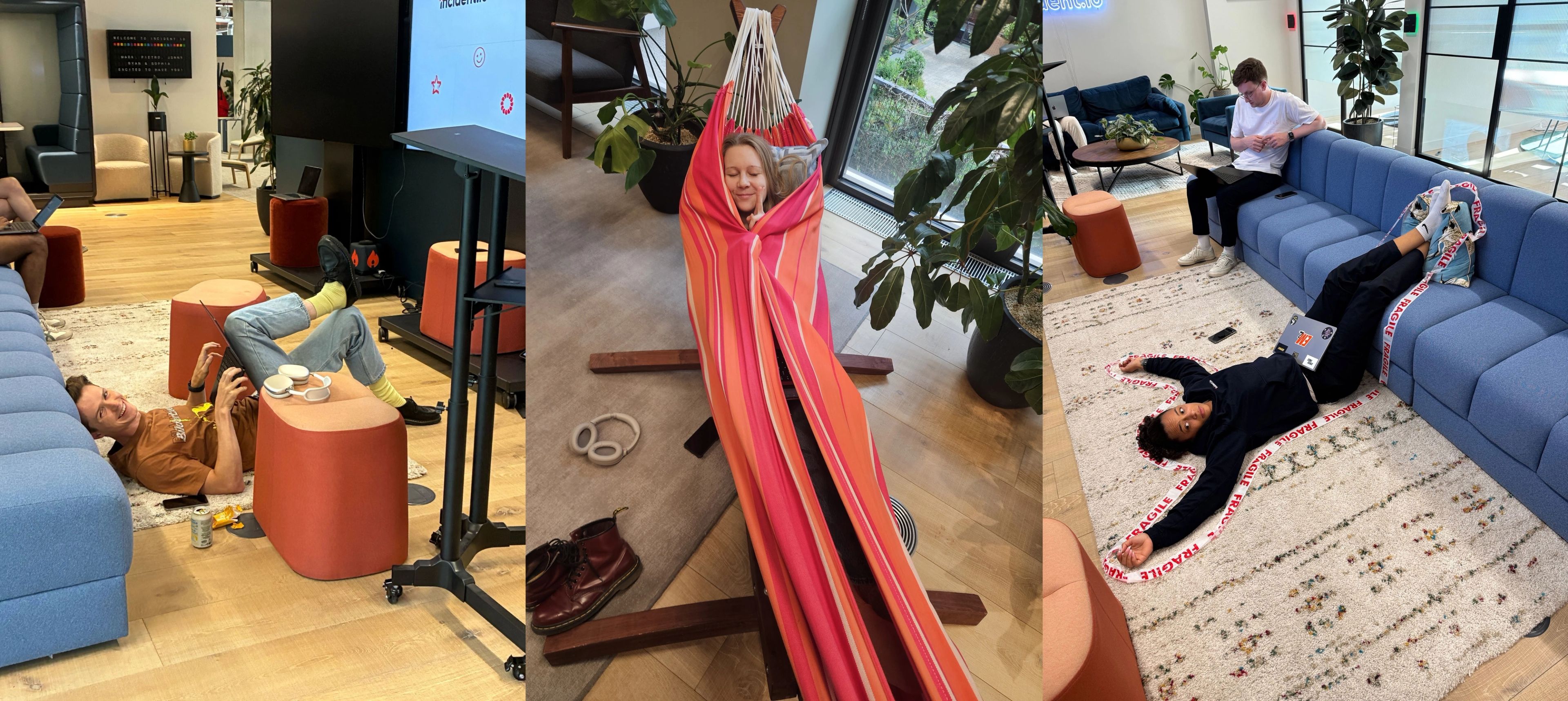
You learn a lot just by being around
Learning happens effortlessly when you’re sharing a space. With so many talented people around, you pick up insights just by overhearing a conversation about solving a tricky problem or watching teammates pair on something new.
(Literally as I was writing this, I caught a chat about a Raycast shortcut I didn’t know about — and now I’ll save myself a bunch of clicks thanks to that quick exchange.)
Connections make everything easier
Being in person makes it infinitely easier to build strong connections with each other. I see this benefit both within our team, and also across the company.
Working as a team in-person and spending time together every day builds up trust naturally. With that trust comes honesty, accountability, and a safe environment for people to challenge and improve things.
It’s also incredibly helpful to get to know people outside your team and department.
Some of the best chats happen while waiting for the coffee machine or deciding on an afternoon snack. Often they’re with people you don’t usually work with day-to-day. Without actively realising, you pick up what other teams are working on, what they’re excited about, and who to ask when you need help. When something comes up and you need to ask a favour or unblock something, it’s way easier because you’ve already built a connection.
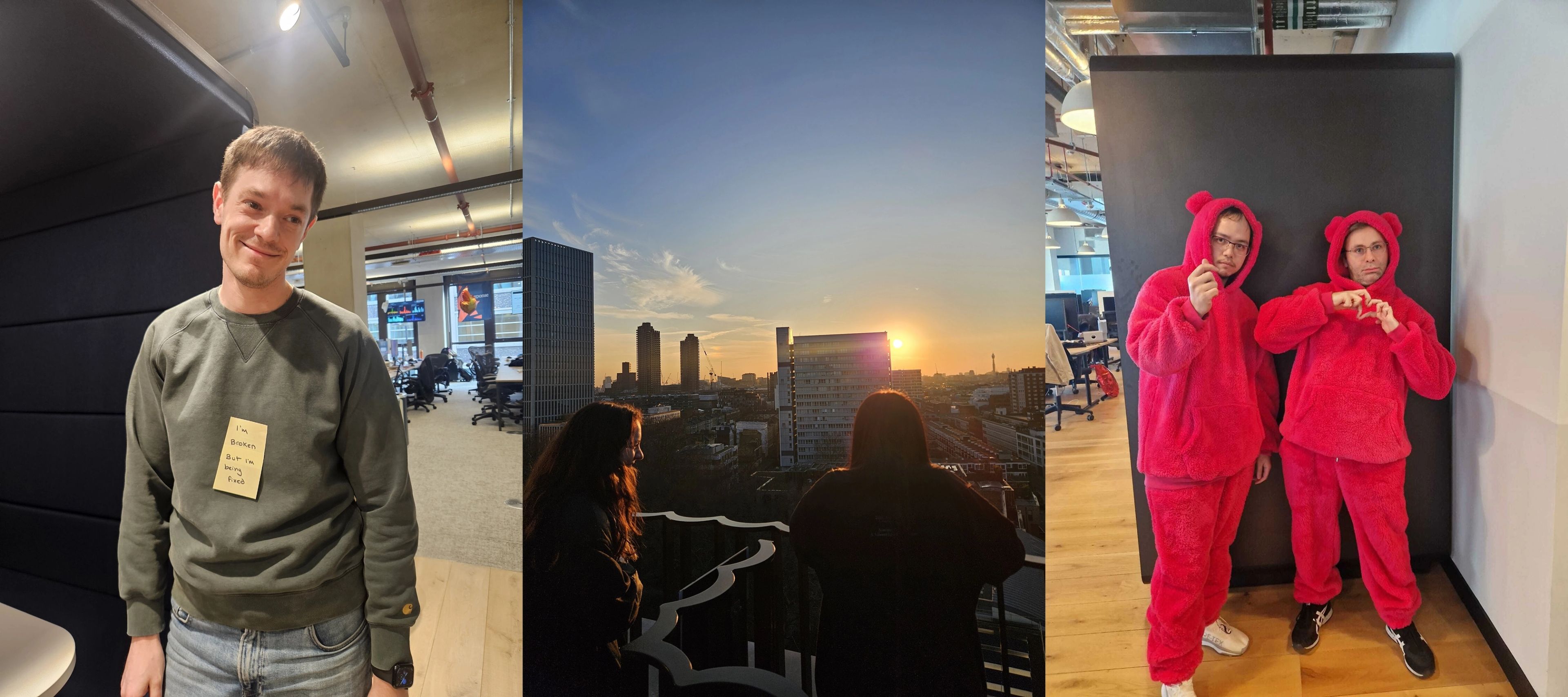
It’s also just really fun
We take our work seriously, but we don’t take ourselves too seriously.
There are lots of laughs, there are silly & lovely little post-it notes left on desks, and there is a giant plushy goose that watches out over City Road (if he’s not busy giving moral support to one of the team).
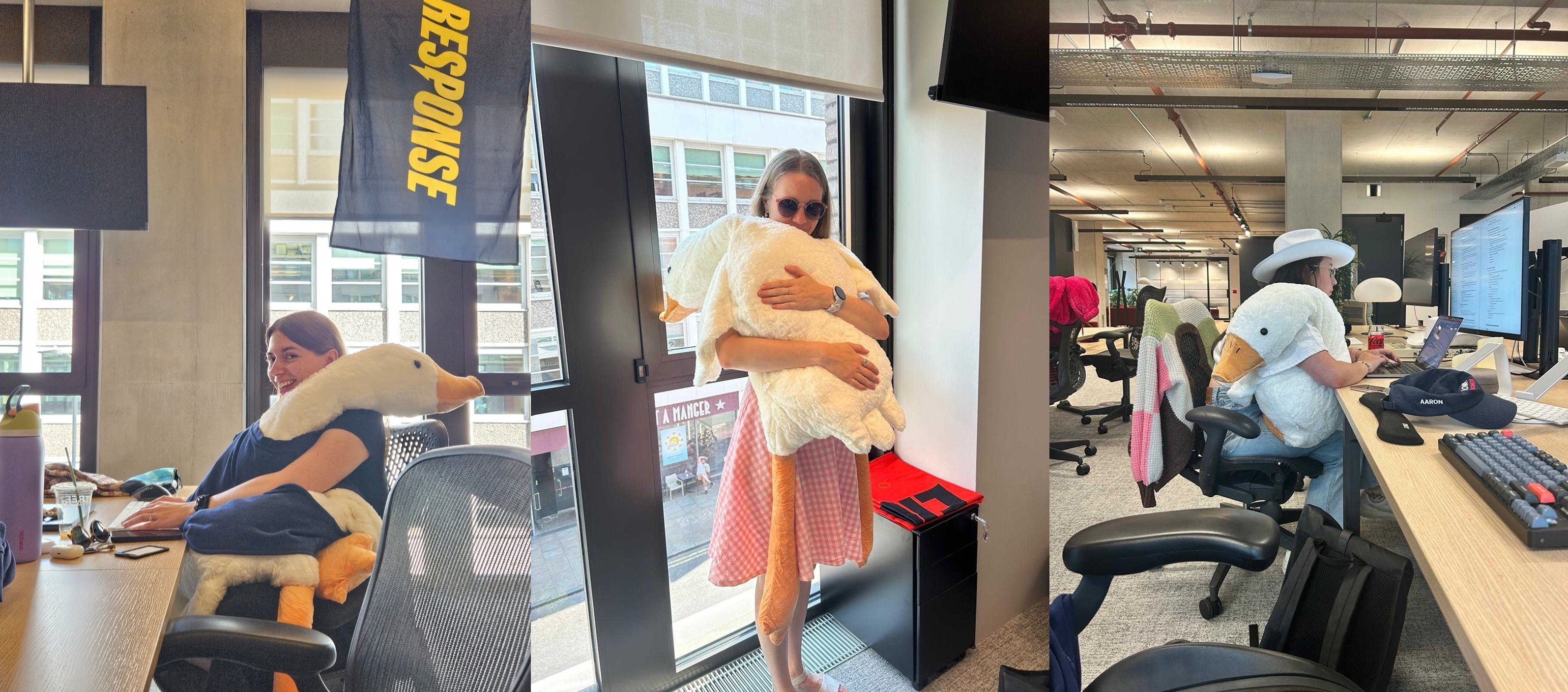
There’s also real energy in seeing people around you focused and building cool things — it’s contagious and exciting.
Lunch is better with friends. Brainstorms are easier in person. Work is more fun when you’re doing it together.
(Also, we have frequent visits from some very lovely doggos.)
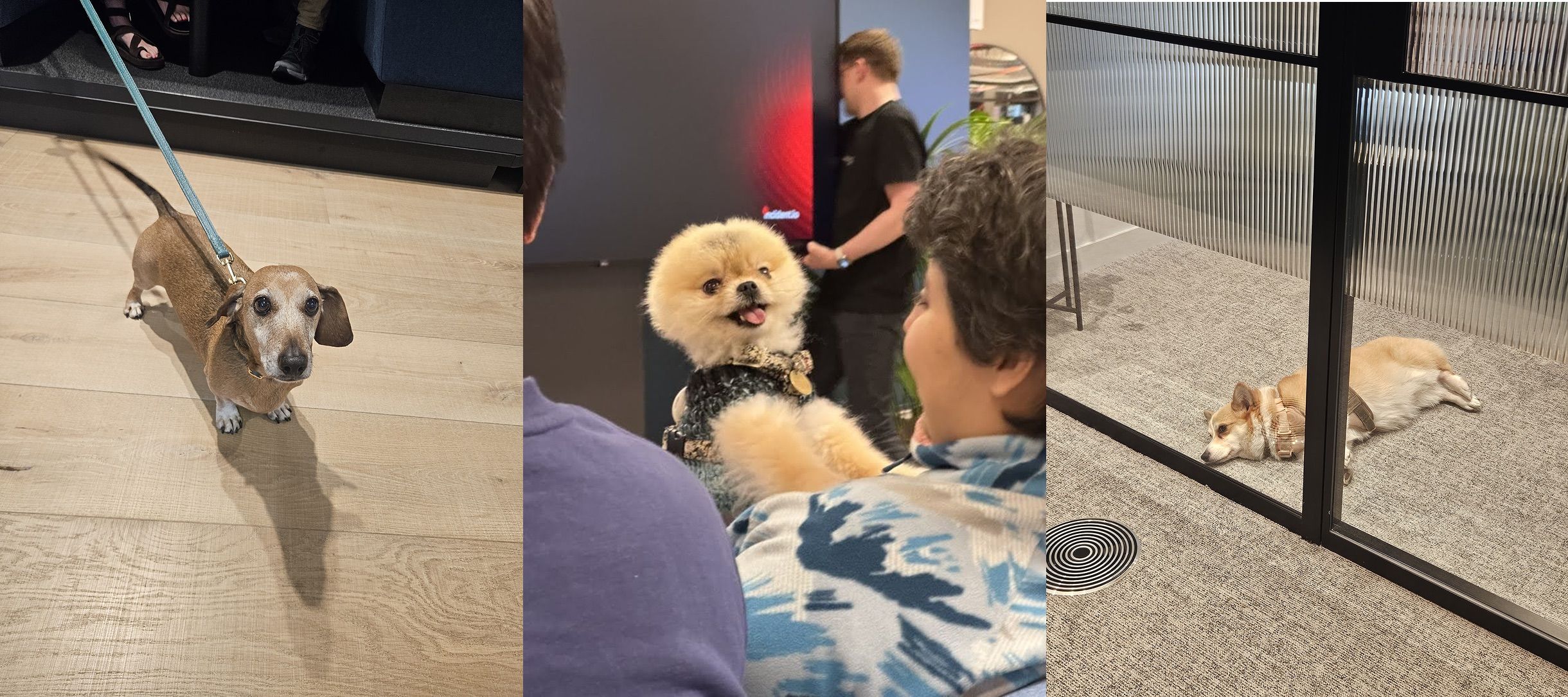
We're not against remote work. We just really like being here.
People still work remotely, and can structure their weeks to fit around their life: like Louis, who works from home on Tuesdays to dog-sit (and we get the benefit of getting to see the dogs on camera in stand-up), or Kelsey, who will often work from home in the morning to wait for the morning commuter rush to die down. I worked remotely in New Zealand for 2 weeks while I visited my family earlier this year. The flexibility is real, and it’s not going anywhere, but for most of us, the office gives us something we don’t get at home.
We move faster, learn more, build stronger connections, and have more fun doing it.

Liz Richardson
Product Engineer
See related articles

Introducing Investigations, powered by Nexus.
Today we're launching Investigations: agentic root cause analysis that starts the moment you're paged, figures out what broke and why, and works with your team through to resolution. Here's what we built, what's powering it, and why it took some time to get right.

August 5, 2026
Fact-checking PagerDuty's Opsgenie alternatives comparison table
PagerDuty published a new comparison table about incident.io. Once again, it describes a product we don't recognize. So once again, we're correcting the record, row by row, with receipts.

July 28, 2026
Your genie is vanishing: introducing the Opsgenie rescue program
Today, we're launching the Opsgenie Rescue Program to make that landing soft: simplified migration and free overlap so you never pay two vendors at once.
July 9, 2026
So good, you’ll break things on purpose
Ready for modern incident management? Book a call with one of our experts today.
We’d love to talk to you about
- All-in-one incident management
- Our unmatched speed of deployment
- Why we’re loved by users and easily adopted
- How we work for the whole organization