What are the key features and benefits of using incident.io for incident management and response?
February 28, 2025 — 3 min read
When your engineering team faces system outages or critical incidents, having the right incident management software can be the difference between a quick recovery and prolonged downtime. incident.io, the software reliability platform built to investigate, respond and prevent incidents, powered by AI that deeply understands your organization, turns chaotic scenarios into manageable, streamlined processes, enabling rapid resolution, clear communication, and continuous improvement.
Key features of incident.io
1. On-call scheduling and management
- Dynamic rotation scheduling minimizes burnout.
- Calendar integrations ensure schedules remain synchronized.
- Automated notifications promptly alert the correct responders.
2. Automated incident response
- Integrations (Datadog, Prometheus, Grafana) automatically generate incidents from monitoring alerts.
- Minimizes manual tasks, accelerating incident acknowledgment and initiation.
3. Real-time collaboration and communication
- Slack and Microsoft Teams integration provide centralized incident channels.
- Facilitates communication among incident commanders, engineers, and support teams.
4. Customizable incident workflows
- Flexible escalation policies tailored to organizational requirements.
- Configurable communication protocols to match unique team workflows.
5. Post-incident analysis and reporting
- Automatic creation of detailed incident timelines and reports.
- Insightful postmortems that highlight root causes and strategies for preventing recurrence.
6. Visibility and stakeholder management
- Dashboards and status pages offer real-time insights.
- Provides transparency for both technical and non-technical stakeholders.
Popular integrations supported
- Monitoring: Datadog, Prometheus, Grafana
- Communication: Slack, Microsoft Teams
- Ticketing & Project Management: Jira, GitHub Issues, Asana
- Status Pages: incident.io built-in status pages, Statuspage.io
Common use cases
- Major outages and downtime incidents
- Security incidents and vulnerability response
- Routine operational issues (bug fixes, performance degradation)
- Customer-facing service disruptions
Typical users of incident.io
- Site Reliability Engineers (SREs)
- Incident response teams
- DevOps and engineering teams
- Customer support teams
- Executive and stakeholder groups
Key benefits of using incident.io
- Reduced Mean Time to Recovery (MTTR): Accelerated response through automation reduces downtime.
- Improved productivity and team morale: Less manual administration, more problem-solving.
- Continuous learning: Effective post-incident reviews foster ongoing improvement.
- Enhanced customer trust: Transparent status updates maintain confidence during incidents.
Conclusion
As the software reliability platform built to investigate, respond and prevent incidents, powered by AI that deeply understands your organization, incident.io enables engineering teams to efficiently manage incidents, reduce downtime, enhance internal communication, and adopt a proactive approach to reliability. Investing in a dedicated reliability platform today creates a more resilient organization tomorrow.

Tom Wentworth
Chief Marketing Officer
See related articles

Introducing Investigations, powered by Nexus.
Today we're launching Investigations: agentic root cause analysis that starts the moment you're paged, figures out what broke and why, and works with your team through to resolution. Here's what we built, what's powering it, and why it took some time to get right.

August 5, 2026
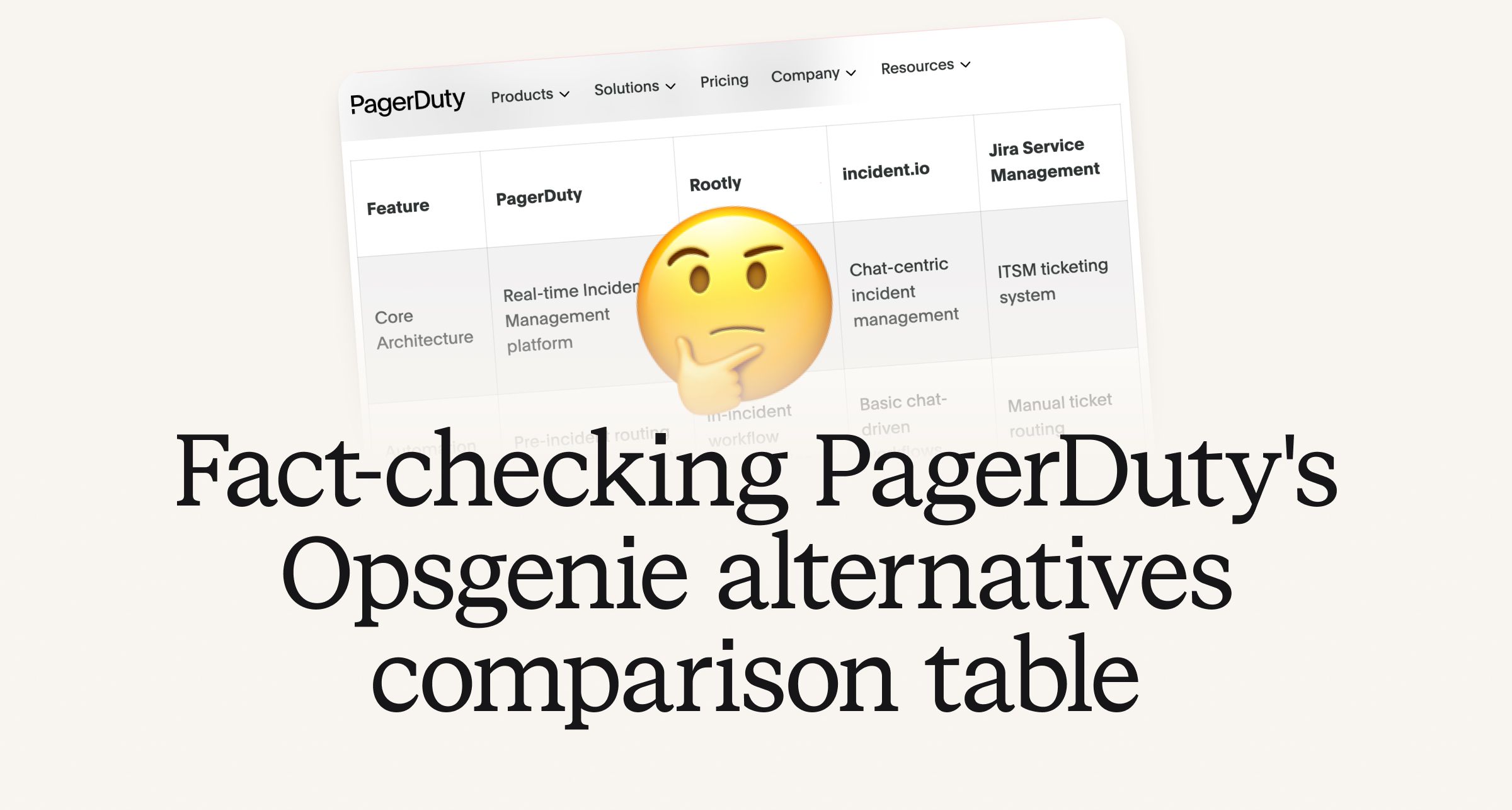
Fact-checking PagerDuty's Opsgenie alternatives comparison table
PagerDuty published a new comparison table about incident.io. Once again, it describes a product we don't recognize. So once again, we're correcting the record, row by row, with receipts.

July 28, 2026

Your genie is vanishing: introducing the Opsgenie rescue program
Today, we're launching the Opsgenie Rescue Program to make that landing soft: simplified migration and free overlap so you never pay two vendors at once.
July 9, 2026
So good, you’ll break things on purpose
Ready for modern incident management? Book a call with one of our experts today.
We’d love to talk to you about
- All-in-one incident management
- Our unmatched speed of deployment
- Why we’re loved by users and easily adopted
- How we work for the whole organization