Introducing Investigations, powered by Nexus.
August 5, 2026 — 7 min read
We’ve helped nearly a quarter of a million responders spend over 3 million hours resolving well over a million incidents. These are incredibly smart people who should be working on building incredible companies and products. Instead, they often spend 20-30% of their time sucked into chaos, stress, and distraction.
The hardest part of these incidents often isn't fixing the problem. It's working out what the problem even is: what caused this, did something change, which services are involved, how bad is it, who does it affect, and is it going to get worse?
The work is slow, manual, and every minute spent during this phase is incredibly expensive. We’ve all been there. It sucks.
This is exactly the kind of problem AI is incredible at: analyzing huge amounts of context, reading postmortems, scanning logs and metrics, analyzing recent deploys, checking dependencies, pattern matching against the last time something looked like this. It's some of the most valuable work in an incident, and also some of the most tedious and time-consuming.
Today, we're launching Investigations, to autonomously investigate and diagnose incidents, with agents and humans working side by side. The moment an incident is declared, Investigations kicks off, figures out what broke and why, and works with you right through to when the incident is closed.
It’s crazy how good it is. Here’s more on what we’ve built, and why.
What Investigations does
Investigations automates the most time-consuming part of incident response: figuring out what broke and why, and making sure it’s fixed as quickly as possible. It starts the moment an incident is declared and works with you right up until it's resolved.
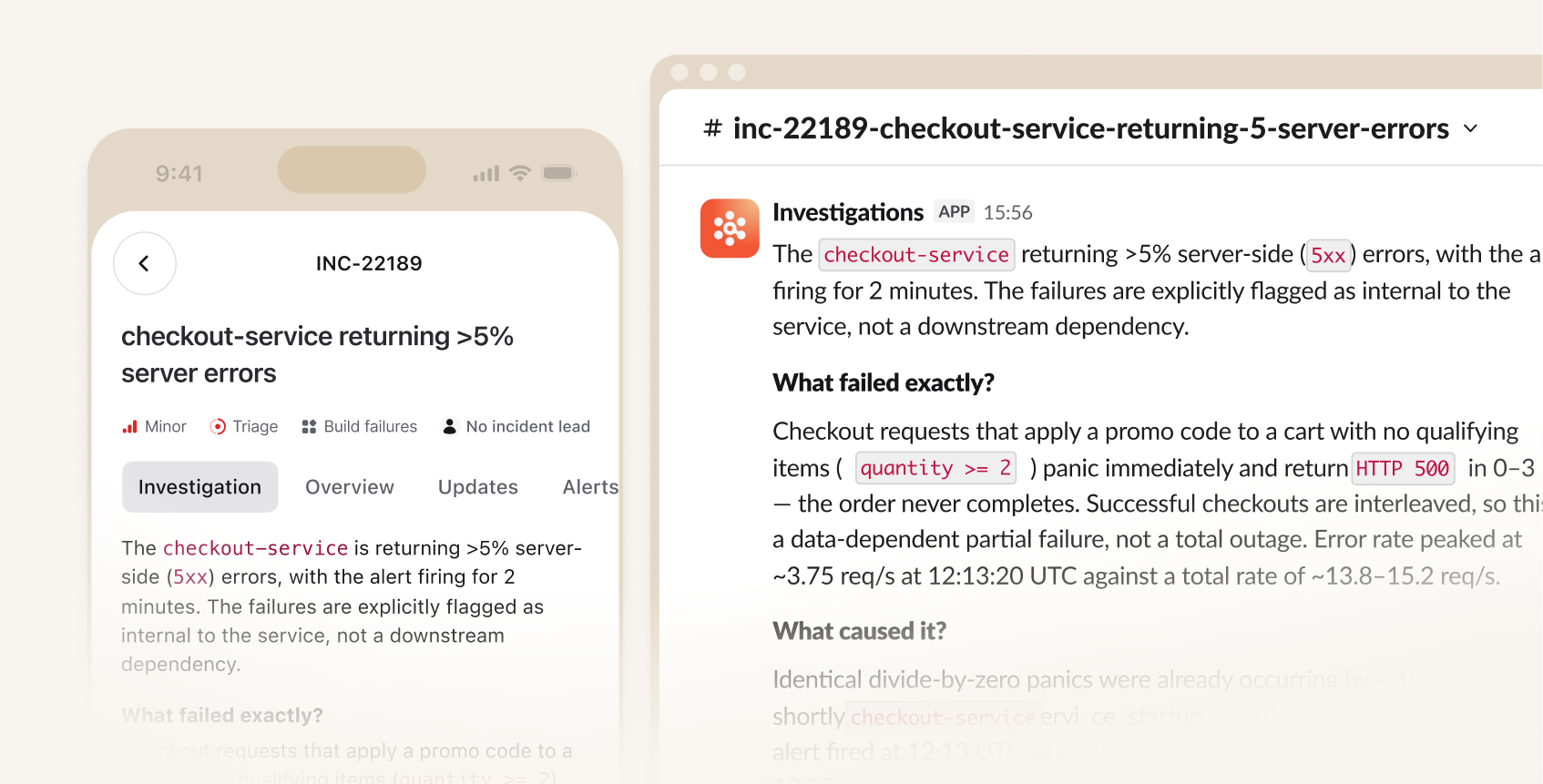
Within seconds of an incident being declared, Investigations has done a first pass and posted a short summary to your channel (and if you’re using incident.io On-call, directly in the mobile app). What's going on, what it thinks caused it, along with evidence, and what to do next. You know what you're dealing with before you've even brewed your first cup of coffee.
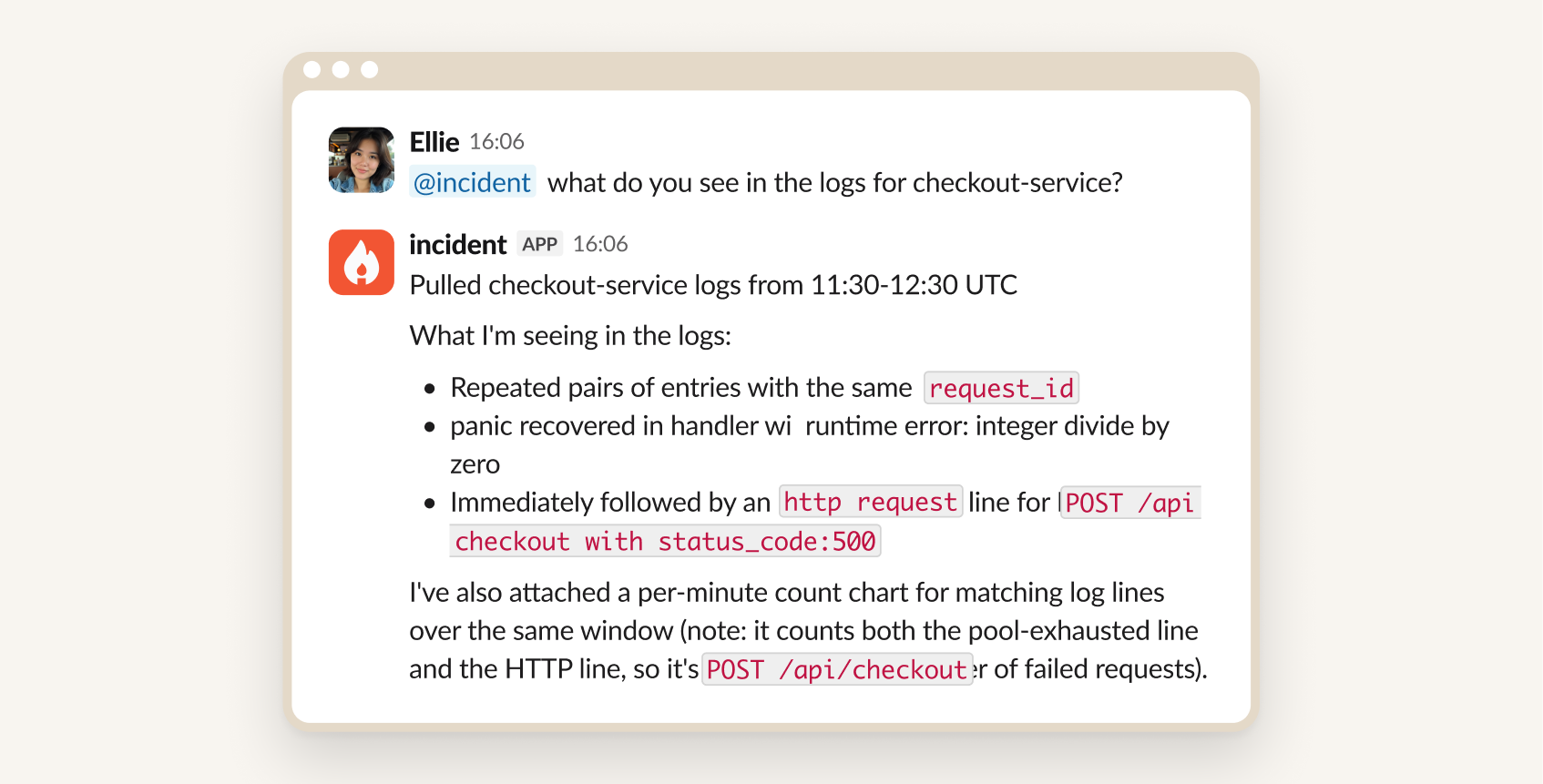
It works throughout the incident, weighing new evidence as it lands and surfacing what matters before you've thought to look. Ask it anything or steer it in a new direction, and rather than just handing you an answer, it shows you its reasoning, so you and the agent are working the problem together.
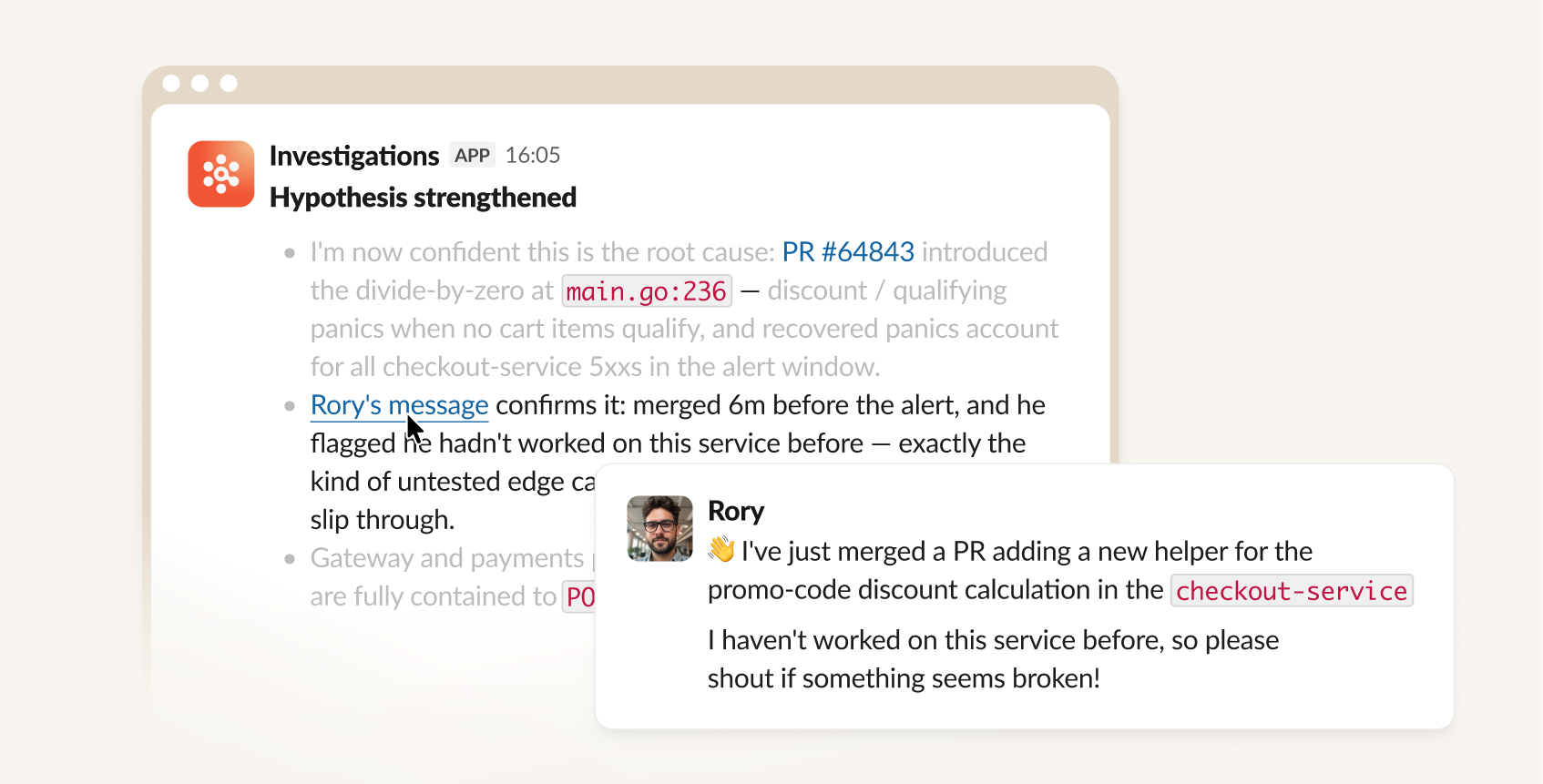
Every hypothesis links to its sources, from a pull request to a spike in a metric, and it shows the theories it ruled out along the way, so you can challenge its thinking or draw your own conclusions.
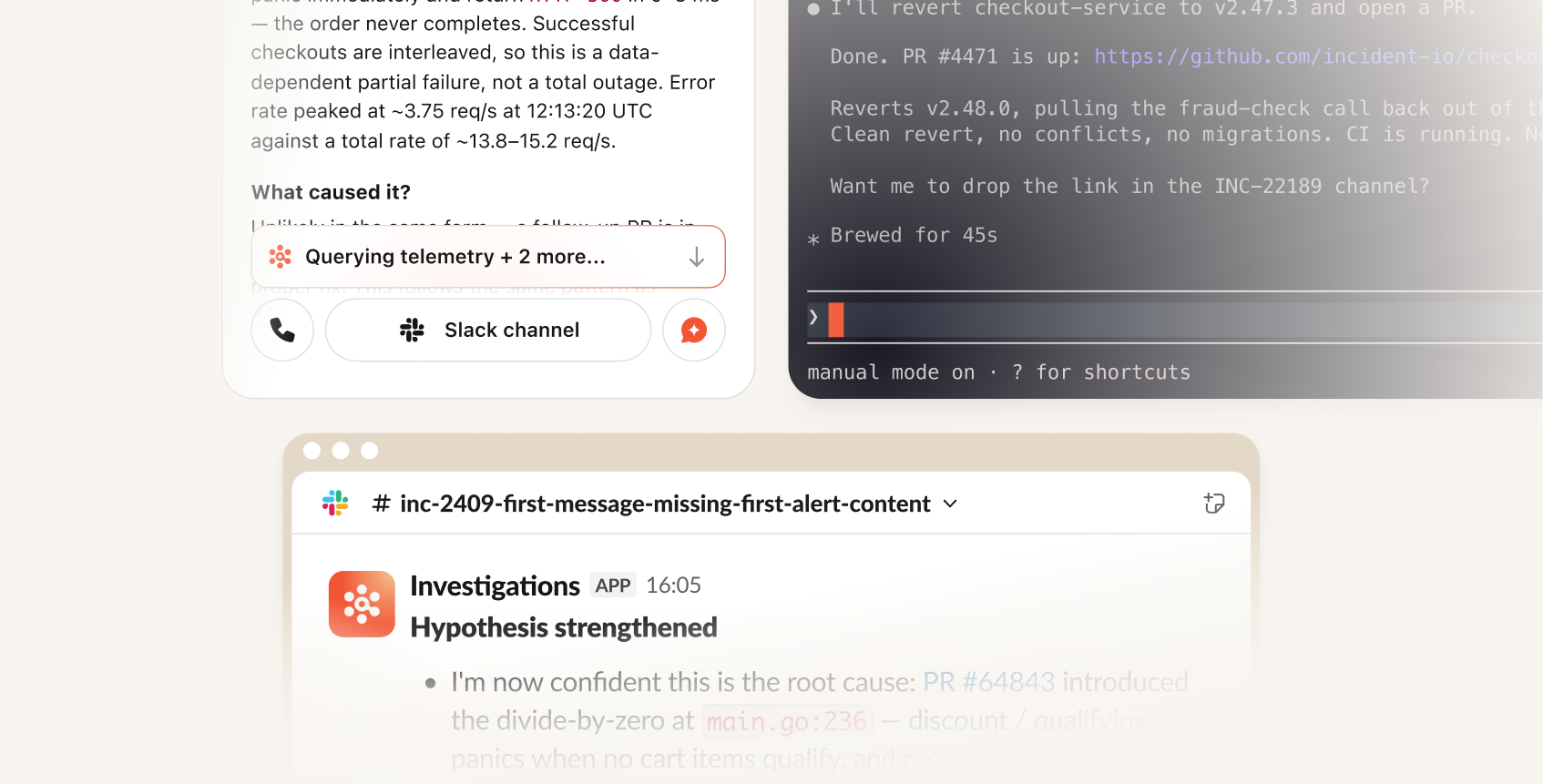
Investigations meets you where you already work. Slack, Microsoft Teams, the dashboard, your phone, our MacOS app, or the terminal and coding agents over MCP. When you reach a conclusion, it hands off to the tools in your stack. The goal is humans and agents working in lockstep, from the first alert right through to the final fix.
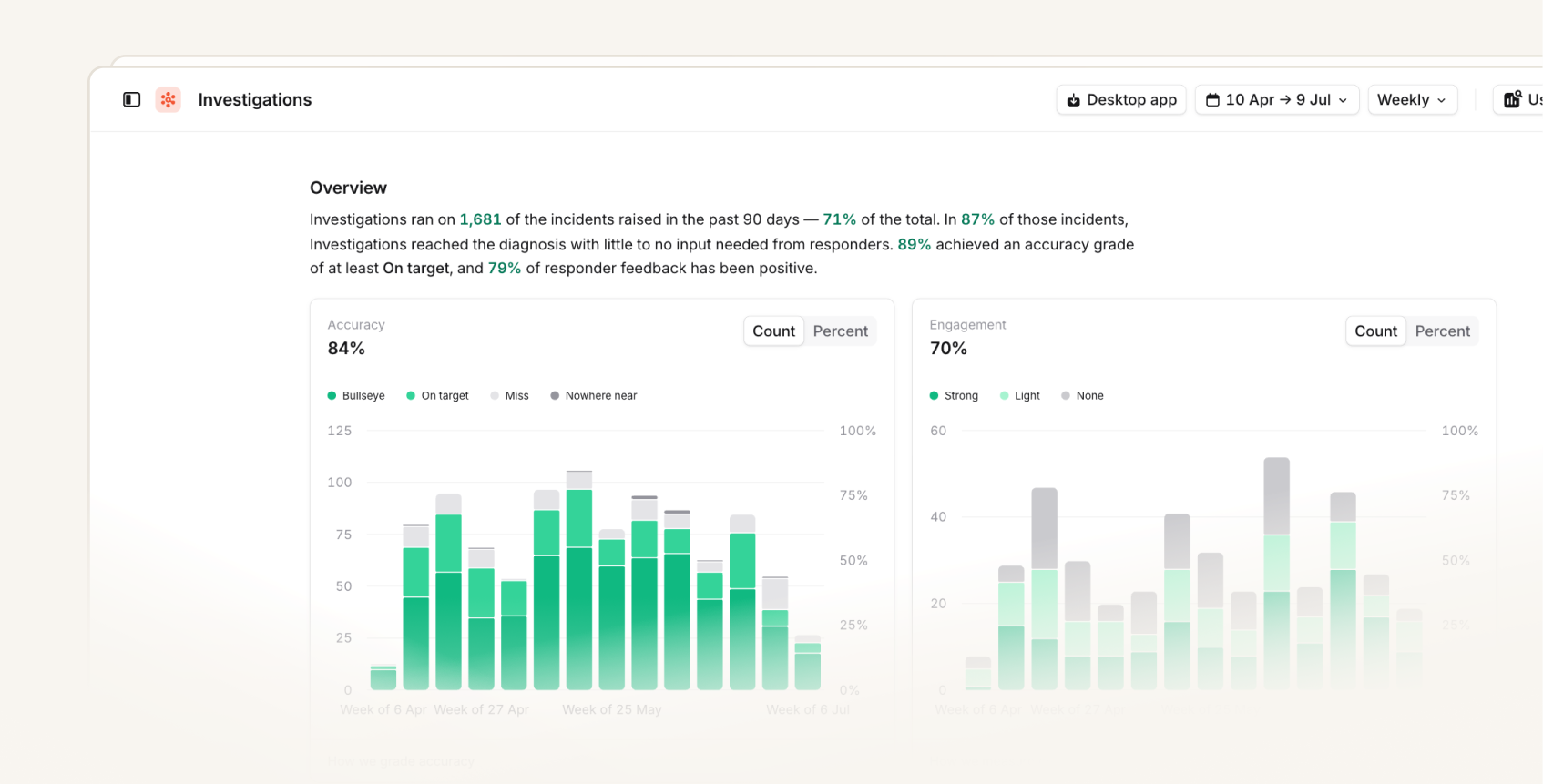
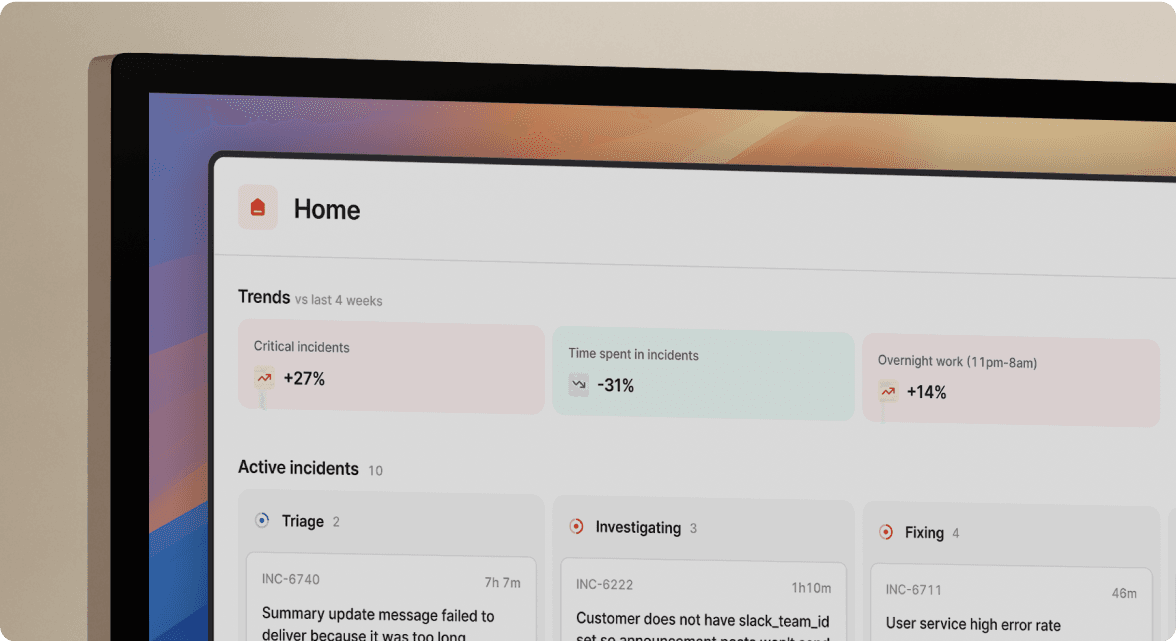
We share key metrics in the dashboard so you can track how accurate its diagnoses are, how much your team engages with it, and how each incident reached its diagnosis, so you can spot the biggest wins and the misses.
We’ve built some incredible infrastructure under the hood to do exactly this ourselves, and we want to make sure we’re sharing that with you, so you don’t just have to take our word for it.
Powered by Nexus
18 months ago, we had a version of Investigations that looked incredibly promising; the demo looked impressive, and we thought we were most of the way there. We called it “AI SRE”, shipped it to design partners, started collecting real-world feedback, and then had a reality check.
The real challenge wasn’t a shiny proof of concept; it was a product that could operate consistently, keeping up as systems changed beneath it in real time, and earning enough trust that someone paged at 3 am could actually believe what it told them.
It was tough going, and took time to get right. One incident it’d be spot-on, the next, confidently wrong. We soon realized the hard part was never going to be diagnosing a single incident. It was building a product and platform that could correctly and consistently investigate thousands of them, keep up as systems changed underneath it, plug into all the context needed in real-time, and build genuine trust with engineering teams through a great UX.
A big part of what made it eventually possible is Nexus. Nexus is a living model of your organization: how your systems work, how your team operates, how things break, and how they get fixed. It’s unique to your organization, and your data stays yours - never used to train anyone else's model.
Nexus joins the dots in real-time, reasons across everything it knows and learns from every incident, so it compounds over time.
The more you use incident.io, the smarter it gets, and it now powers the majority of agentic interactions and products on our platform, including Investigations.
Where we’re going next
We've always believed the real cost of an incident isn't just the downtime. It's the engineering hours spent chasing signals, the customers who felt the pain before you realized anything was wrong, a response that varies wildly depending on who got paged.
We exist to keep the world's software reliable, and most of that reliability is won or lost in how quickly and how well you respond. Investigations takes on the part of that work where we believe genuinely good and thoughtful AI can make the biggest difference.
Investigations is the first of many products we’re building on top of the platform we developed to power it. We’re starting with incidents, but we have plans to apply the same technology to problems like:
- Automated investigations on alerts for high-volume triage
- Alert deflection and noise reduction
- Detecting and preventing risky changes hitting production
- Self driving runbooks and automated observability improvement
That’s just a taste. There’s so much more to come and our roadmap has never felt more exciting.
Available today
Investigations is available today, and the feedback from customers already using it has been fantastic, and I'm really proud of what the team has built.
We’d love to show you how Investigations can help you respond to incidents faster and reduce the cost of incidents significantly.
Book a demo to take it for a spin or check out our changelog for more details.

Pete Hamilton
Co-Founder & CTO
See related articles
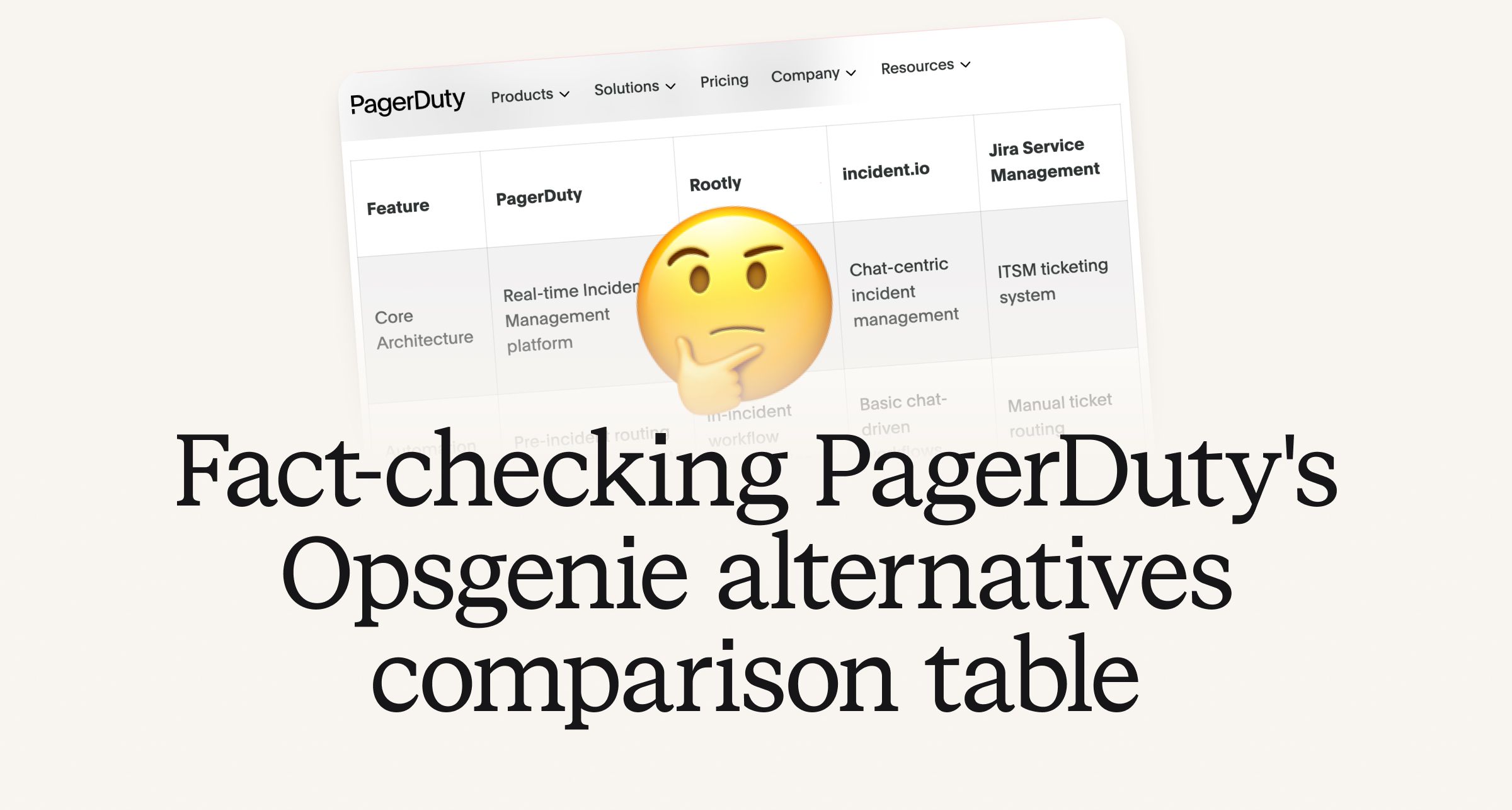
Fact-checking PagerDuty's Opsgenie alternatives comparison table
PagerDuty published a new comparison table about incident.io. Once again, it describes a product we don't recognize. So once again, we're correcting the record, row by row, with receipts.

July 28, 2026

Your genie is vanishing: introducing the Opsgenie rescue program
Today, we're launching the Opsgenie Rescue Program to make that landing soft: simplified migration and free overlap so you never pay two vendors at once.
July 9, 2026
De-risking a PagerDuty migration: the objections we hear most, and how to clear them
Often, switching on-call platforms isn't a technical challenge but a human one. In this post, we break down the seven objections engineering teams raise most often when considering a PagerDuty migration, and share exactly how to address each one.

June 9, 2026
So good, you’ll break things on purpose
Ready for modern incident management? Book a call with one of our experts today.
We’d love to talk to you about
- All-in-one incident management
- Our unmatched speed of deployment
- Why we’re loved by users and easily adopted
- How we work for the whole organization