At incident.io, we empower teams to run incidents quickly and effectively from start to finish. One of the ways we help is by taking the manual admin out of your incidents. More often than not, folks are spending too much time thinking about the process, when the time would be better spent focusing on fixing.
Our automated workflows, nudges and prompts help to embed best practices and unlock time for more impactful work. But one thing that can slow down your incident response is finding that your on-call responder doesn’t have permission to access the right systems to resolve the incident. When this happens, getting a fix in place may be blocked until the right person can be contacted to grant permissions.
To minimise reliance on manual processes when this happens, Indent - an on-demand access control provider - has just released a new integration with incident.io which enables time-bound access to cloud apps and infrastructure. This ensures valid and timely access to sensitive systems while still meeting requirements for compliance frameworks like SOC2.
Get your on-call team secure on-demand access in seconds ⌛️
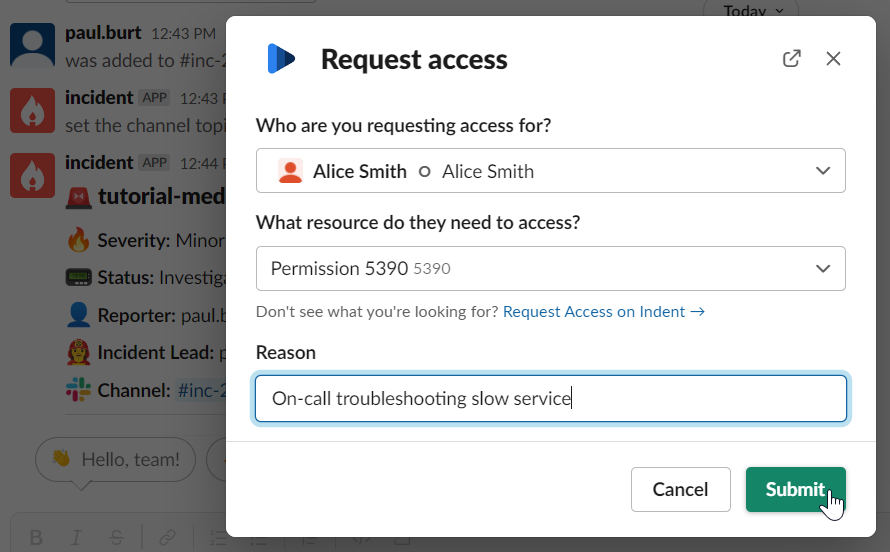
Request escalated on-call access from Slack using /access. The user will be automatically granted based on their role assignment of an ongoing incident or routed to the right reviewer for approval.
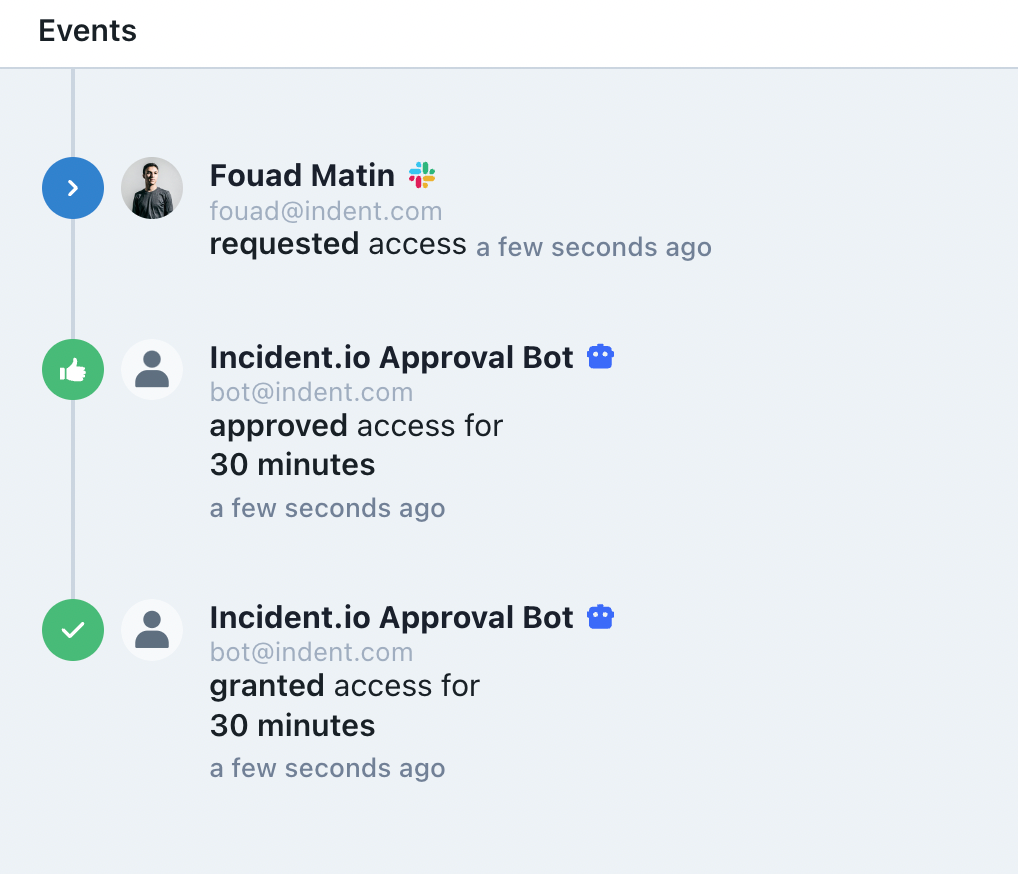
Auto-revoke access after the incident is resolved 🔒
Configure on-call access durations for incidents. If more time is needed, users can easily request more time via Slack, web app or chrome extension.
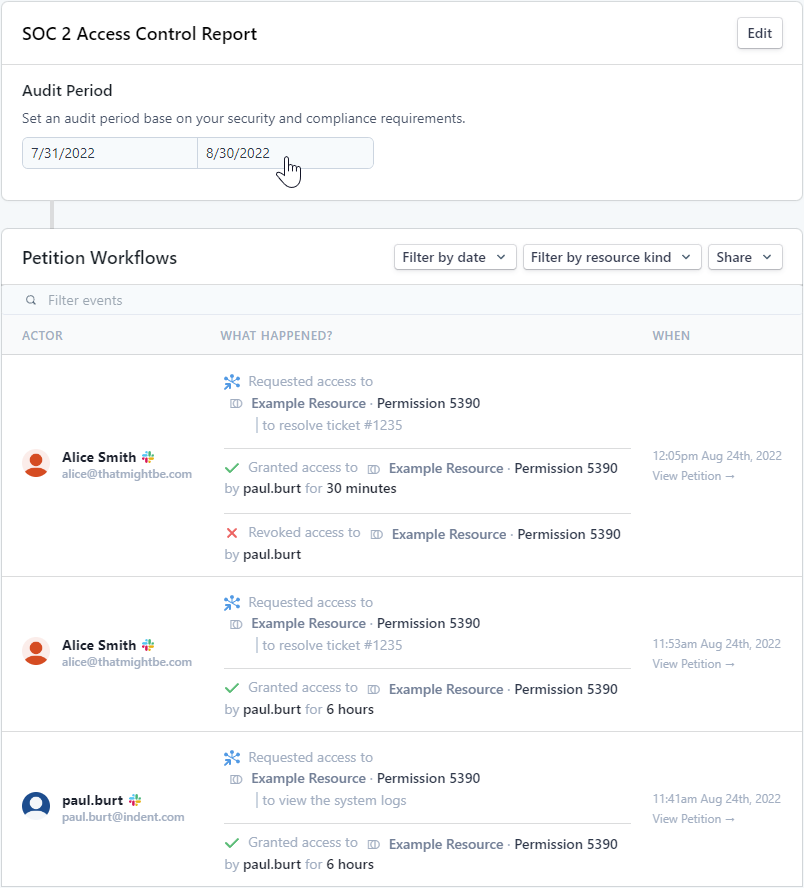
Record accurate logs during incidents for compliance audits 📝
Keep track of who requested access to what, whether it was approved or denied, and for how long they had it until it expired.
Getting started
Give it a try below, or see it on the Indent blog.
Check out these resources to start using incident.io and Indent together:
See related articles
Is AI just another third-party dependency? Yes, right up until it isn't
Should you treat the AI model behind your product like any other third-party dependency? Two engineers, one at Skyscanner and one at incident.io, say mostly yes for SLAs, SLOs and observability, and mostly no for debugging. Here's where the analogy holds and where it breaks.

Degrade gracefully: designing AI features that keep working when the model doesn't
AI is now in the critical path for a lot of engineering teams, and the models behind it will have bad days. We asked Skyscanner's Michael Tweed and incident.io's Sahaj Sawhney how to build AI that degrades gracefully instead of falling over.

Introducing Investigations, powered by Nexus.
Today we're launching Investigations: agentic root cause analysis that starts the moment you're paged, figures out what broke and why, and works with your team through to resolution. Here's what we built, what's powering it, and why it took some time to get right.

So good, you’ll break things on purpose
Ready for modern incident management? Book a call with one of our experts today.
We’d love to talk to you about
- All-in-one incident management
- Our unmatched speed of deployment
- Why we’re loved by users and easily adopted
- How we work for the whole organization