We scope your migration before you commit, then plan and execute it. Purpose-built tooling and white-glove migration from the team that's moved Trainline, Zendesk, DocuSign, and Intercom.
Escape the pager duty
PagerDuty worked. For a long time, it was the standard. But the world's changed, and PagerDuty hasn't.
What hundreds of PagerDuty customers have told us
We've built an entire system on top of our pager
Custom scripts for escalations, a bot for channel creation, a spreadsheet for on-call pay - most PD teams have 5-10 workarounds they've stopped questioning
Cover requests still happen over DMs
Someone needs a night off on-call. The process? A Slack message, a manual schedule swap, and hoping the handover sticks.
Our prices kept going up but the product hasn't changed
Prices keep going up and features keep getting gated, but the daily on-call experience still hasn't caught up.
Our pager went down, but we had no way to know
PagerDuty publishes 99.9% uptime. That's 43 minutes a month your pager isn't paging you.
We've built an entire system on top of our pager
Custom scripts for escalations, a bot for channel creation, a spreadsheet for on-call pay - most PD teams have 5-10 workarounds they've stopped questioning
Cover requests still happen over DMs
Someone needs a night off on-call. The process? A Slack message, a manual schedule swap, and hoping the handover sticks.
Our prices kept going up but the product hasn't changed
Prices keep going up and features keep getting gated, but the daily on-call experience still hasn't caught up.
Our pager went down, but we had no way to know
PagerDuty publishes 99.9% uptime. That's 43 minutes a month your pager isn't paging you.
The PagerDuty Rescue Program
The single biggest reason teams stay on PagerDuty isn’t the product, it’s the pain of leaving. We’ve removed every barrier.
See how switching works
Contract buyout
Stuck mid-contract? We cover the overlap so you’re not paying two vendors at once. Up to 12 months free on a multi-year deal.
Up to 99.99% uptime, in writing
We commit to 99.99% uptime in our SLA for Enterprise customers. PagerDuty's SLA is 99.9%. That gap matters at 3am.
Switch for on-call. Stay for everything else.
PagerDuty pages you. We page you and handle everything after - response, post-mortems, status pages, workflows, and follow-ups. One platform, built as one system.

AI at every step
Alert intelligence, investigation, transcription, post-mortems - AI across the whole lifecycle.
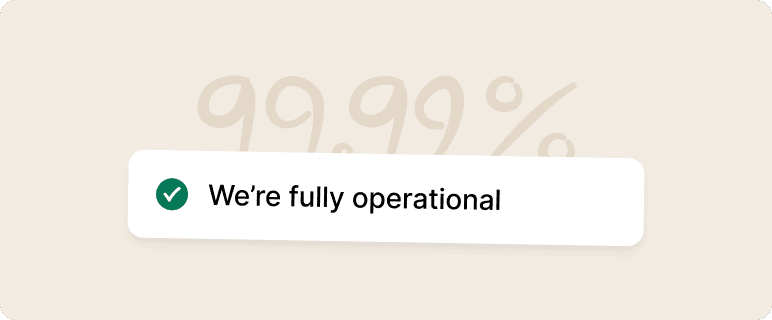
Up to 99.99% reliability
We commit to 99.99% for Enterprise customers vs PagerDuty publishes 99.9%. Under 1 hour vs nearly 9 hours of annual downtime.
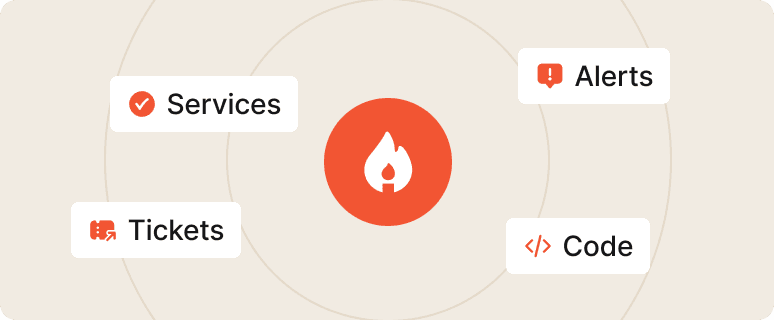
Full lifecycle, one platform
Response, post-mortems, status pages, workflows, and follow-ups - built as one system, not bolted together from acquisitions.

Cover requests from mobile
Need a night off? Request cover, pick time slots, share with your team - after a rough night, we'll even suggest it, while PagerDuty won't even know it happened.

On-call pay, built in
Track on-call hours, set group-based compensation rules, export for payroll. No more pulling data from PagerDuty’s API into a spreadsheet.

Ships every week
PagerDuty neglected on-call for years. We ship features every week that every on-call team recognizes instantly.
Hundreds of teams have already made the switch

“We migrated 1,200 users, 150 teams, and 5,000 monitors to incident.io with a core team of two and saw zero major issues. Our engineers called it one of the smoothest migrations at Zendesk. We've saved hundreds of hours of operational overhead and seen a significant reduction in our costs for observability, monitoring, and alerting. Frankly, it's been one of the best tooling decisions we've made.”
Tom Monaghan
VP, Engineering Productivity & Product Reliability

“The transition was incredibly smooth. Our engineers immediately preferred incident.io over PagerDuty, and adoption across the broader company quickly followed.”
Mark Gorman
Technical Program Manager

“I wouldn’t be too intimidated by the migration. incident.io’s team will support you throughout. You don’t have to feel like you’re taking it on single-handedly. Ground yourself in what the outcome could be: not just cost savings, but quality of life for your on-call engineers, better learnings from these stressful situations, and ultimately a more reliable product for your customers.”
Dylan Bochman
Incident Commander

“Almost immediately, everything worked out of the box. It was very intuitive. The licensing was really straightforward. And when we compared the costs, it was just a no-brainer for us. We got a whole incident management platform with the paging piece already built in.”
Leigh Darlow
Head of Platform Engineering

“Move across as soon as you can. Convince your senior leaders it's the right thing to do, get your buy-in, and then get stuck in. You learn a lot, you tidy up a lot of tech debt, and you come out the other side in a much better place.”
Dan Cook
Reliability & Operations Manager
How migration actually works
No ambiguity, no surprises. Here's exactly what happens when you start.
- 01
We scan your PagerDuty environment
You share a read-only API key. Our analyzer audits everything - schedules, escalation policies, integrations, Event Orchestration rules, automation actions, and the hidden dependencies your team doesn't even know are there.

- 02
You get a tailored migration plan
From the scan, we generate a custom migration guide for you with a complexity score, timeline estimate, and phased plan covering six streams: account setup, alert connections, routing, dependencies, onboarding prep, and user cutover.

- 03
Our team migrates you
Our team works hand-in-hand with yours through three phases: Test (parallel running, no risk), Trial (live traffic, safety nets on), Go-Live (PagerDuty off).